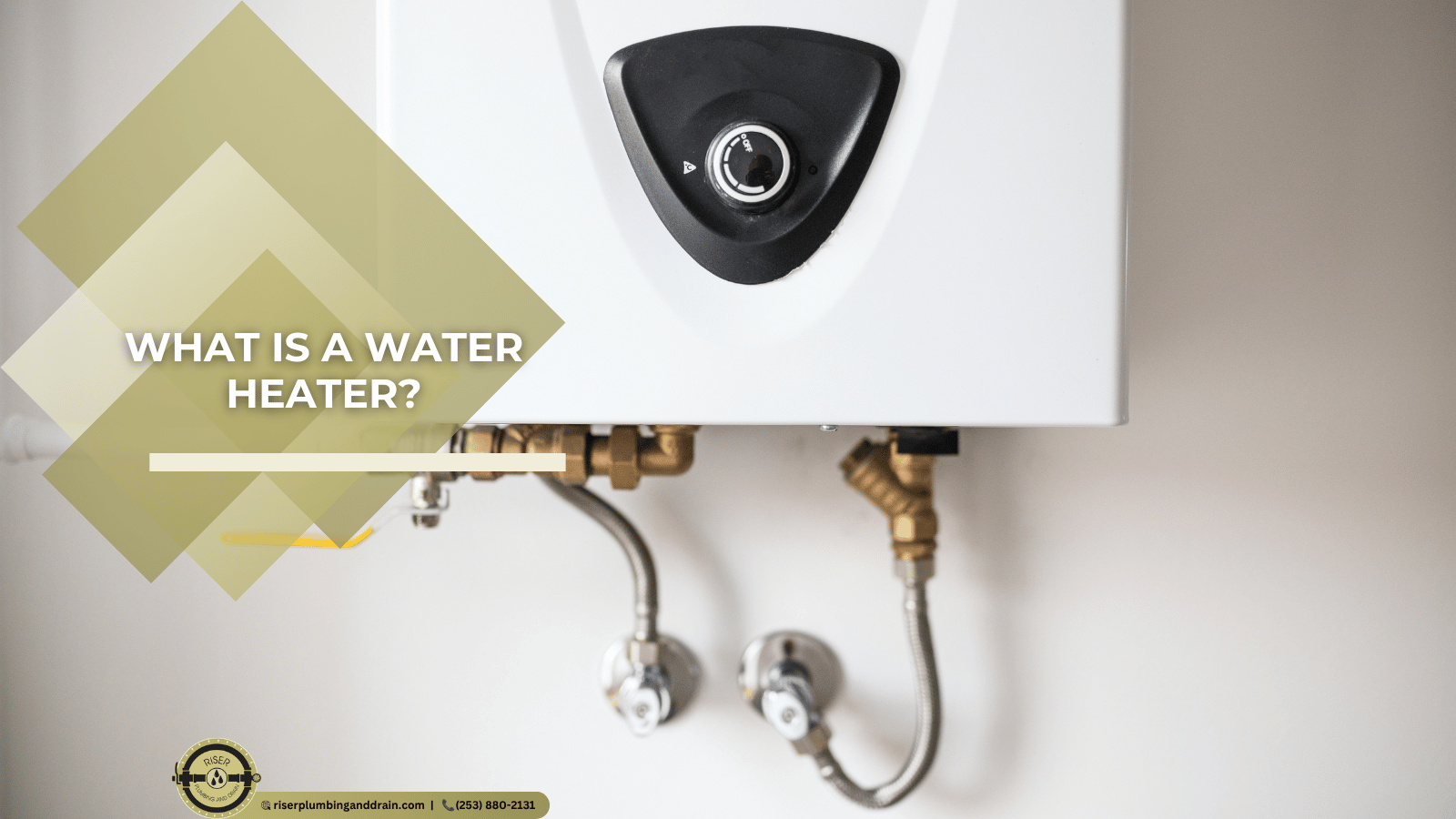
Most people barely notice the appliance behind a warm shower until the water turns cold. So, what is a water heater? It is an appliance that heats water above its natural temperature and sends it to faucets, showers, dishwashers, and other fixtures. Water heaters are one of the hardest-working appliances in a home because they serve bathing, cleaning, cooking, and laundry every day.
Riser Plumbing and Drain helps homeowners across Bonney Lake, South King, and Pierce County with water heaters. Understanding the basics helps you spot trouble and make a better replacement decision.
A Few Useful Things to Know First
- A storage tank keeps heated water ready for use.
- Tankless equipment warms water as it passes through the unit.
- Different water heaters create or transfer heat in different ways.
- Water heating can represent about 20% of an average home’s energy use.
- Proper sizing matters when multiple fixtures need water at once.
- Age, sediment, installation, and maintenance can affect heater efficiency.
How Does This Appliance Turn Cold Water Into Hot Water?
A water heater takes incoming cold water, adds or transfers heat, and sends hot water into the plumbing system.
With a traditional tank model, cold water enters near the bottom of the heater tank. A gas burner or electric heating elements raise the temperature, while insulation slows heat loss. When a faucet opens, hot water leaves from the upper part of the tank and new cold water enters.
A gas storage water heater generally uses natural gas and a burner. An electric unit uses resistance elements. A tankless water heater heats running water on demand as it passes through a heat exchanger.
Common Water Heaters Found in the Home
Beyond asking what is a water heater, know which design fits your demand, space, fuel source, and energy goals.
| Type | How it works | Main tradeoff |
|---|---|---|
| Storage tank | Stores a ready supply | Familiar, but stored heat creates standby energy loss |
| Tankless | Heats during use | Saves space, but flow-rate sizing is critical |
| Heat pump | Moves heat from surrounding air into a tank | Efficient, but needs suitable placement |
| Solar | Uses collectors to help heat water | Can reduce purchased energy, but usually needs backup support |
Storage Tank Systems
Storage tank water heaters are straightforward and keep hot water ready. A tank that is too small may run short during back-to-back showers, while an oversized model may use unnecessary energy keeping extra water warm.
Tankless Systems
Tankless models start heating when a fixture opens, avoiding storage losses.
Flow rate still matters. Several fixtures running together can overwhelm an undersized unit. Colder incoming water also requires a greater temperature rise, which matters during sizing.
Heat Pump and Solar Water Systems
A heat pump water heater moves heat from surrounding air into stored water rather than relying only on electric resistance. This can make a high-efficiency version much more efficient than a standard electric model.
Solar water heating captures solar energy through collectors and typically pairs with storage and a backup source. Roof conditions, climate, system design, and backup energy should be considered before choosing it.
What Affects Heater Efficiency?
Knowing what is a water heater also means knowing what affects efficiency. Water heaters perform differently based on size, installation, thermostat setting, sediment, and daily demand.
Check these factors:
- Capacity or flow rate should match actual demand.
- ENERGY STAR and Uniform Energy Factor information can help compare models.
- Heat pump systems need suitable installation space.
- Tank systems benefit from maintenance that limits sediment buildup.
- For many residential applications, 120°F is a commonly recommended setting that balances energy use and scald risk.
Even a top-rated model can disappoint if it is the wrong size or poorly installed. The equipment has to fit the home.
Signs Your Unit Needs Professional Support
Understanding what is a water heater is useful, but recognizing failure early can prevent a bigger disruption.
Call a plumber if you find water around the base, repeatedly lose hot water, hear popping or banging, notice discolored water from the hot side, or see a sudden decline in performance. A heater that keeps running longer while delivering less may have sediment or a failing component.
Riser Plumbing and Drain notes that traditional units often reach replacement age around 10 to 12 years. Age alone does not require replacement, but recurring repairs or a leaking older tank deserve attention.
Choosing the Right System for Your Household
Do not choose a water heater from tank size alone. Consider household size, peak fixture use, existing gas or electrical service, installation space, and upfront versus long-term energy costs.
For tank models, capacity and first-hour performance matter. For on-demand equipment, flow rate and temperature rise are key. For a heat pump model, placement, electrical requirements, and condensate drainage also matter.
How Riser Plumbing and Drain Helps
Replacement is not always the first answer. Riser Plumbing and Drain evaluates the existing equipment, household demand, and installation conditions before recommending service or a properly sized replacement.
The team works with traditional tank water heaters, tankless systems, and energy-efficient models. Technicians assess the setup, recommend suitable options, and install the selected system for reliable performance.
Why homeowners choose Riser Plumbing and Drain:
- Locally owned and operated
- Licensed, bonded, and insured by the Washington Department of Labor & Industries, #RISERPD774OG
- Same-day appointments available
- Upfront, transparent pricing
- Technicians are not commission-based
- Senior and military discounts available
Contact Riser Plumbing and Drain
Need help with a leaking or inconsistent water heater? Contact Riser Plumbing and Drain to schedule service.
Phone: (253) 867-8318
Service area: Bonney Lake, Sumner, Buckley, Enumclaw, Edgewood, Puyallup, Federal Way, Auburn, Tacoma, Lakewood, and Orting, Washington.
Frequently Asked Questions
What Size Water Heater Does a Family Need?
The right size depends on peak demand, not household size alone. Compare tank units by capacity and first-hour rating, and on-demand units by flow rate and temperature rise.
How Long Does a Typical Unit Last?
Many conventional water heaters are replaced around 10 to 12 years, but maintenance, water quality, installation, and usage can change service life.
Are On-Demand Systems Always More Energy Efficient?
Not in every home. Actual energy performance depends on fuel, usage, incoming water temperature, demand, installation, and the specific equipment.
What Is the Difference Between a Boiler and a Water Heater?
A water heater primarily supplies domestic hot water, while a boiler is usually designed for space heating and may also produce domestic water through an indirect system.
Can I Replace a Gas Unit With a Heat Pump Model?
Often, yes, but the change may require electrical, space, drainage, or other installation upgrades, so the existing setup should be evaluated first.