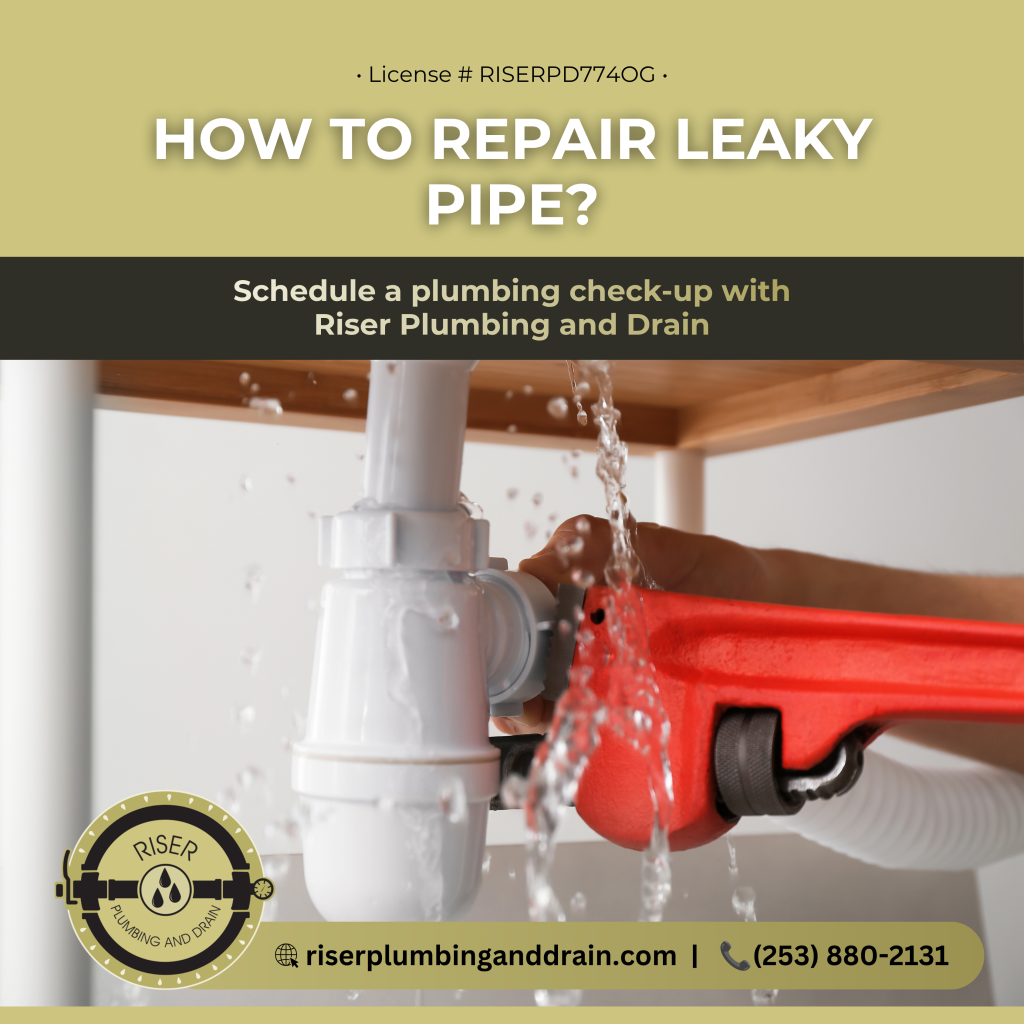
A small drip today can become a costly plumbing problem tomorrow. When a pipe starts leaking, knowing what to do quickly can help limit water damage and keep a minor issue from becoming a major repair. Whether you notice moisture beneath a sink, water around a fitting, or a steady drip from an exposed pipe, understanding the basics of pipe repair can help.
In this guide, we explain how to repair leaky pipes safely, what temporary repair methods may help, and when professional help is the better option. For dependable plumbing solutions, Riser Plumbing and Drain can help homeowners identify the source of a leak and determine the right repair approach.
How to Repair a Leaky Pipe | Start With the Basics
Before fixing a leaking pipe, identify where the water is actually coming from. Water can travel along the outside of a pipe before dripping, so the visible leak may be different from the actual problem area.
Begin by drying the pipe and surrounding surfaces. Watch carefully to see where fresh moisture appears. Check joints, fittings, connections, and visible cracks. If the leak is connected to your home’s water supply, shut off the appropriate water valve to reduce pressure and prevent more water from escaping.
Once the water is off, clean and dry the repair area. This makes it easier to inspect the pipe and choose an appropriate repair method. If the pipe is badly corroded, cracked over a large section, or difficult to access, attempting a DIY fix may not provide a dependable long-term solution.
Find the Source of the Leak
Locating the exact source is one of the most important parts of successful leak repair. A pipe may appear to leak at one point when the real problem is several inches away.
Look for discoloration, mineral buildup, damp insulation, corrosion, or signs of previous water damage. Pay attention to areas where pipes connect or change direction. These locations can experience additional pressure and may develop leaks over time.
For hidden pipe leaks, professional inspection may be necessary. Riser Plumbing and Drain can help determine whether a visible water leak comes from a damaged pipe, a loose connection, or another plumbing component.
Epoxy Putty for Small Pipe Repairs
For certain small leaks, epoxy putty can provide a temporary repair. This material bonds around damaged areas and forms a hardened barrier when applied correctly.
Before using epoxy repair putty, the pipe generally needs to be clean and dry. Follow the manufacturer’s directions carefully, mix the product as instructed, and press it firmly around the affected section. Allow it to cure for the recommended period before restoring water pressure.
Epoxy products are not suitable for every situation. They may work for small, accessible damage, but a deteriorated pipe may require replacement rather than a surface repair. Always consider the pipe’s material, condition, location, and pressure before choosing this method.
Pipe Wrap Can Offer a Temporary Fix
Another option for certain minor problems is pipe wrap. Specialized repair tape or wrap can be placed around a leaking section to help contain moisture and provide a temporary repair.
Clean the pipe before applying the wrap. Follow the product instructions regarding overlap, tension, and curing time. Some products are designed specifically for plumbing applications, while ordinary household tape may not withstand water pressure.
A pipe wrap should not automatically be considered a permanent solution. If the underlying pipe continues to weaken, the leak can return. A professional inspection can determine whether the pipe needs a more complete repair or replacement.
When to Use a Repair Clamp
A repair clamp can help with certain straight sections of damaged pipe. These clamps fit around the affected area and apply pressure to a sealing material.
For the right pipe and leak, a properly sized clamp can help control a water leak while you arrange a permanent solution. Pipe clamps come in different sizes and designs, so choose one that matches the pipe.
Before installing a clamp, shut off the water and release pressure from the affected section. Position the clamp according to the manufacturer’s instructions, and make sure it fits securely. However, if the pipe has extensive corrosion or structural damage, a clamp may only address the immediate symptom.
Silicone-Based Sealants and Other Options
Some plumbing repairs involve silicone-based sealants or other products designed to seal around fittings and connections. These products can help in specific applications, but use them only as intended.
Don’t treat a sealant as a universal fix for every leaking pipe. Using the wrong product on a pressurized or damaged pipe can cause another leak. Product instructions should always be reviewed before use.
The pipe material also matters. Copper, PVC, galvanized, cast iron, and other pipes can require different repair techniques and products. What works for one material may not be appropriate for another.
Test the Pipe After Fixing the Leak
After completing a temporary or permanent repair, testing is essential. Restore the water supply gradually rather than immediately opening the system to full pressure.
Watch the repair area carefully. Check for fresh moisture, dripping, movement, or signs that the seal is failing. Run nearby fixtures if appropriate and inspect the pipe again after several minutes.
If the leak returns, do not continue adding layers of tape, putty, or sealant without addressing the underlying issue. Repeated leaking may indicate that the pipe itself has deteriorated or that water pressure is contributing to the problem.
Riser Plumbing and Drain can inspect recurring leaks and help determine the appropriate pipe repair solution instead of relying on repeated temporary fixes.
Prevent Future Pipe Leaks and Water Damage
Fixing a leak is important, but preventing future plumbing problems is just as valuable. Regular attention can help you notice developing issues before they cause significant damage to your home.
Watch for corrosion, unusual moisture, reduced water pressure, stains, and unexplained increases in water usage. Keep accessible plumbing areas dry and inspect visible pipes periodically. Address small plumbing concerns before they become larger failures.
Temporary repair products also have limitations. A patch may stop water temporarily while the pipe continues to deteriorate underneath. Professional pipe repair or replacement may ultimately be more cost-effective when the damage is significant.
Contact Us
Knowing how to repair leaky pipe problems can help you respond quickly, but not every leak should be handled as a DIY project. A leaking pipe inside a wall, a pressurized water line, or a severely damaged section can create serious risks if the repair is incomplete.
Riser Plumbing and Drain provides professional plumbing assistance for homeowners dealing with leaks and other pipe problems. The right solution may involve repairing a damaged section, replacing a fitting, or addressing a larger plumbing issue that caused the leak in the first place.
When water starts escaping from a pipe, quick action can make a meaningful difference. Riser Plumbing and Drain is ready to help turn an unexpected leak into a properly managed plumbing repair. When you need dependable help, contact Riser Plumbing and Drain for professional service and a solution tailored to your plumbing system.